
It’s really important when you are working on historical
fiction to keep in mind that people have not thought the same thoughts for all
time.
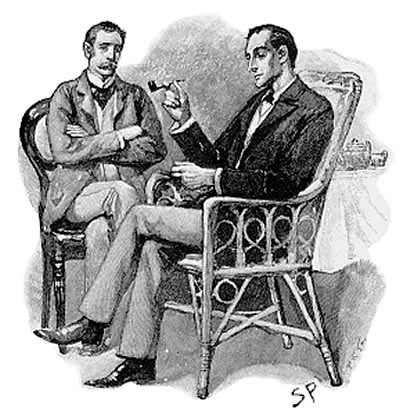
For example, I recently watched the newest Sherlock Holmes: A Game of Shadows and
the two main characters had a conversation about Watson’s upcoming marriage and
Watson stated that he wanted a “relationship.”
 |
| photo ©2010 , Flickr |
I paused at that small statement because I don’t think
the concept of “a relationship” as we know it today was around in London 1800s.
Marriages were marriages, not a partnership or a “relationship.” They were made
for monetary reasons, for survival reasons, occasionally for affectionate
reasons. In the past, people didn’t think of love the way we do now. Life wasn’t
all about finding one’s true love. Love was something that grew with time if
you were lucky after marrying someone for survival reasons.
Now, first thing, let me point out that I’m not dissing Sherlock Holmes. I love those movies and
really those movies are commercial and blockbuster so that level of historical
fine tuning isn’t what that general audience wants from those movies. I’m just
using that as an example because I watched over the weekend.
Finding happiness . . . also, a concept that has changed
over time. For many historical people, like in the dark ages, happiness as the final
outcome of their lives—ha! I’d venture to even say that is a very American
concept created from: “. . . Life, Liberty, and the Pursuit of Happiness . . .”
not to mention fairy tales. Remember original fairy tales did not have happy
endings—usually they were kind of gory.
Politics, freedom, war, political correctness, religion,
the beyond, heaven, survival, the life span, birth, sex, contraception,
medicine, illness, the mind, and I could go on and on about areas of thought
that would have been different at different times in history.
 |
| Vintage Irish military photograph of the attack on the Lusitania, surrounded by bodies of victims with text reading "Irishmen avenge the Lusitania. Join an Irish Regiment Today." |
Well, we as writers or even historians can’t possibly
know what people thought in history. Sure we have diaries and a couple other musings
of historical minds but that doesn’t mean we can know everything that was in
their heads! No, but we do know a lot from diaries and other sources and a lot
of this stuff can be figured out if you put a little of your modern thought
into it.
The idea of flying saucers and little green men were obviously
inconceivable to people in the 1700s before there were airplanes. The idea of slavery was not considered immoral
for thousands of years, long before the Americas.
The areas that will take a little more energy are things
that are not as well known and those are the areas that will interest readers
those most. Keep in mind your readers would rather be wrapped up in a
semi-inaccurate story than go “huh?” to strange facts but by taking historical
thought into consideration, you will create a much more vivid and interesting historical
world and story.
How do you do that? Just start thinking about it, keeping
it in mind when you are researching and writing. Look for overly modern
concepts while editing. Do a focused research session on your time period
taking thought into consideration. Try to get into your characters heads and of
course read up on the history of thought. Yeah, I’m not just making this crap
up – it’s an area of professional historical study. I’ve got some resources
below.
Leave a Comment: What are some examples of times you are writing and have had to consider historical thought that might seem strange or unbelievable to the way we think today?
Some interesting references:
Ideas: A History of Thought and Invention,
from Fire to Freud by Peter
Watson
The Modern Mind: An Intellectual History of
the 20th Century by Peter Watson
A History of Knowledge: Past, Present, and
Future by Charles
Van Doren
The History of Christian Thought by Jonathan
Hill
Freud and Beyond: A History of Modern
Psychoanalytic Thought by Stephen
A. Mitchell & M. J. Black
A History of Freedom of Thought by J.
B. Bury and H. J. Blackham
A History of Western Political Thought by J.
S. McClelland and Dr J S Mcclelland
Check them out at Amazon.
I found this post very interesting, but actually I'm responding to your question on the FB Writing Fiction group (I dropped out of that group because I sensed Ainsley and I weren't seeing eye-to-eye.) Your question was in regard to my post on my blog of Ch. 22 of my novel. I posted that chapter on the Ruminations of a Remembrancer blog because I wanted to include something in the 3rd Sunday Blog Carnival and this chapter is pretty "stand alone." But when I started this indie publishing business, I was instructed that publishing sample chapters of one's book on one's blog was a must. So I did that on http://termitewriter.blogspot.com for the first 14 chapters of "Termite Queen," and the first few chapters of "Stolen Mother" on my other blog, http://termitespeaker.blogspot.com Frankly I've been thinking that I'm not sure it's done a lot of good. My books tend to be a little slow out of the starting gate so I'm not sure publishing the early chapters helped sales that much. And people can get sample downloads on Smashwords.
ReplyDeleteI like your blog - I'll see if I can follow it. I'll also look for you on Twitter. I'm @TermiteWriter
Thanks for sharing Lorinda. That's very interesting and good to know how you think it's doing. I'll check out your blog and look for you on Twitter. Thanks for commenting. =)
ReplyDeleteIt's true that the practice of slavery was wide spread in the ancient world and that very few people questioned the institution, however you do sometimes see discussions of it. The Stoic Philosopher Blossius of Cumae, who lived during the second century BC was said to have planned to found Heliopolis, a city without slaves. Plutarch criticizes Cato the Elder for his ill-treatment of his slaves, implying that he, himslelf, would no more sell off an elderly slave than he would an elderly dog. In my Historical novel The Death of Carthage, one of my characters is distinctly opposed to slavery, but this person was born a slave as his father had been captured in war. However I make it clear that this person's opinion is unique:"Whenever I hold forth on the subject I'm met with incredulous looks and glassy-eyed stares, so I generally only do that when I've had more wine than I should."
ReplyDeleteThanks for your comment Robin, it is so very interesting when you find historical documents where people have a very modern opinion - it's one of those things I call gems. I checked out your book on www.goodreads.com and it looks very interesting. Put that on my to-read list. Thanks again for sharing.
ReplyDelete